Debate Mode · Live now
Watch AI Philosophers Debate Life's Biggest Questions
PhiloMind AI Debate Mode is live. Choose two debate-ready philosophers, select a suggested topic or enter your own question, and compare how two source-grounded AI interpretations challenge each other's assumptions, arguments, values, and conclusions turn by turn.
How the live philosopher debate simulator works
Start with a philosophical disagreement that has more than one defensible answer. Pick two philosophers currently enabled for Debate Mode, choose a suggested topic or write your own question, then follow the exchange turn by turn.
The goal is not to declare an automatic winner. The useful part is seeing where the two perspectives begin from different premises, what each side treats as important evidence, and which conclusion follows from those commitments.
- Choose two debate-ready philosophers
- Select a suggested topic or enter a specific philosophical question
- Follow each response and counter-response turn by turn
- Compare assumptions, principles, values, and conclusions before forming your own view
Debate-ready philosophers
The live Debate Mode roster currently includes Socrates, Plato, Epictetus, Friedrich Nietzsche, and Immanuel Kant. The roster is tied to the same production readiness controls used by the app, while public philosopher profiles explain each thinker's sources, methods, and historical limits in more detail.
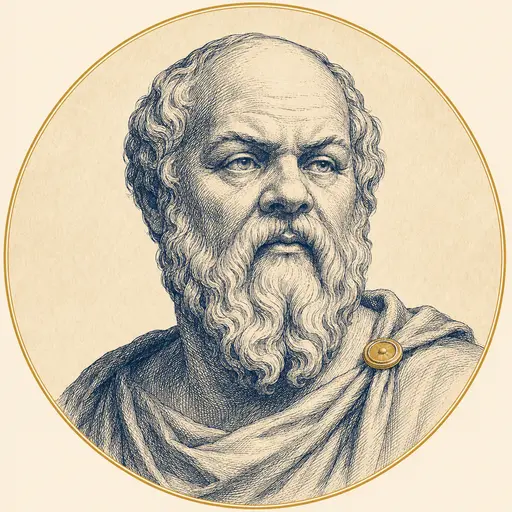
Examination and definitions
Socrates
Useful for testing assumptions, clarifying terms, exposing contradictions, and examining reasons.
Meet Socrates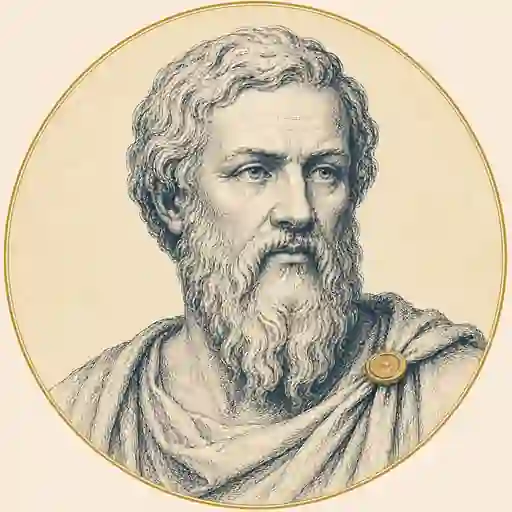
Dialectic and the examined good
Plato
Useful for questions about justice, love, knowledge, the soul, education, and how competing accounts can be tested through dialectic.
Meet Plato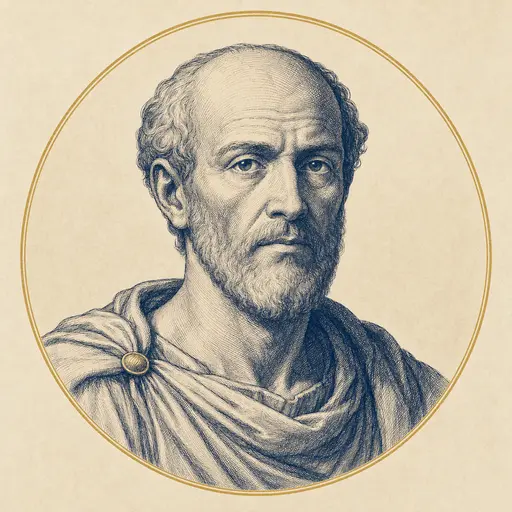
Stoic agency and freedom
Epictetus
Useful for questions about what is up to us, judgment, inner freedom, roles, and disciplined action.
Meet Epictetus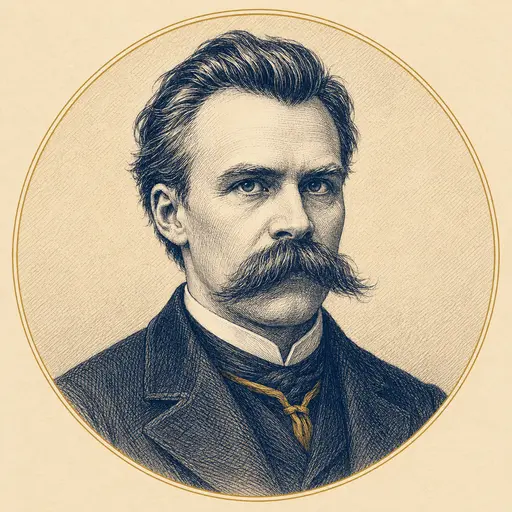
Genealogy and value critique
Friedrich Nietzsche
Useful for challenging inherited values, motives, conformity, resentment, and ideals of self-overcoming.
Meet Nietzsche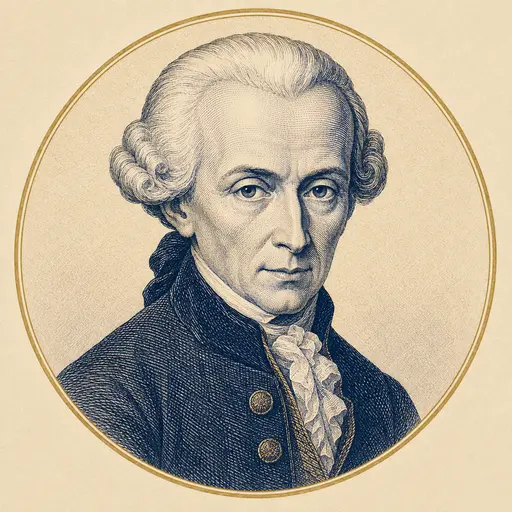
Duty and moral principles
Immanuel Kant
Useful for testing universal principles, autonomy, dignity, fairness, and whether people are treated as ends.
Meet KantQuestions worth debating
Specific questions produce more useful philosophical disagreement than broad prompts such as 'debate morality.' Try a concrete conflict between two currently debate-ready perspectives, then refine the question as the exchange exposes hidden assumptions.
- Kant vs Nietzsche: Are moral duties universal, or should inherited values be re-evaluated?
- Socrates vs Nietzsche: Does a good life begin with examination of beliefs or creation of new values?
- Epictetus vs Kant: Is freedom mainly disciplined control of judgment, or autonomy under rational moral law?
- Plato vs Nietzsche: Do objective standards of the good guide human flourishing, or should value hierarchies be re-examined genealogically?
- Socrates vs Plato: How far can questioning take us before a positive account of justice, knowledge, or the good is required?
What source-grounded debate means
A PhiloMind debate is generated by AI; it is not a recovered historical conversation and it should not be read as a verbatim statement that either philosopher literally made. Each side is an interpretation shaped by approved sources and philosopher-specific reasoning methods.
When a debate depends on a historical claim, source reference, or disputed interpretation, PhiloMind keeps quotation, paraphrase, and modern AI interpretation separate. That makes the disagreement more useful without pretending that historical uncertainty has disappeared.
- No fabricated historical debate transcript
- Approved source sets shape each philosopher's context
- Different reasoning methods remain distinct across turns
- Source references and interpretation limits stay visible when available
Explore the strongest philosopher comparisons
Use these editorial comparison pages before a live debate when the corresponding philosophers are available, or after a debate when you want to inspect a disagreement more slowly. The Marcus Aurelius and Epictetus page is an editorial comparison; Marcus Aurelius is not currently enabled for live Debate Mode.
Duty vs value critique
Kant vs Nietzsche
Compare universal duty, dignity, autonomy, self-overcoming, and Nietzsche's challenge to inherited morality.
Compare Kant and NietzscheExamination vs revaluation
Socrates vs Nietzsche
Compare Socratic definition and self-examination with Nietzschean genealogy, motive-testing, and revaluation.
Compare Socrates and Nietzsche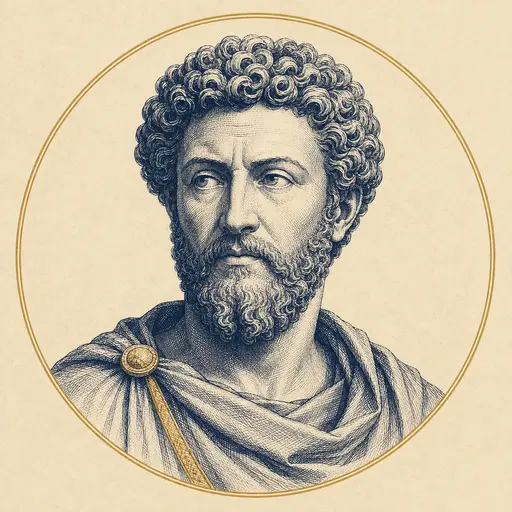
Editorial Stoic comparison
Marcus Aurelius vs Epictetus
Compare Stoic judgment, duty, control, inner freedom, role ethics, and practical exercises without implying a currently enabled live pairing.
Compare Marcus and EpictetusRead the philosophical background
These source-reviewed articles add deeper context around the same disagreements and create a direct path between educational search content, comparison pages, and the live Debate Mode experience.
Philosopher comparison
Kant vs Nietzsche: Duty, Values, and Human Freedom
A longer source-grounded guide to universal obligation, value genealogy, autonomy, and freedom.
Read the Kant vs Nietzsche guideStoic comparison
Marcus Aurelius vs Epictetus: Two Approaches to Stoic Control
See how Epictetus explains agency and how Marcus Aurelius repeatedly applies related Stoic ideas under pressure.
Read the Stoic comparisonSocratic method
What Is Socrates AI?
Understand how a modern Socratic AI can model disciplined questioning while keeping historical uncertainty explicit.
Read the Socrates AI guideSource transparency
Every conversation on PhiloMind AI is AI-generated and shaped by approved philosophical sources, documented reasoning methods, and explicit source disclosures when available. It is not the historical person, and it may contain uncertainty or limitations.